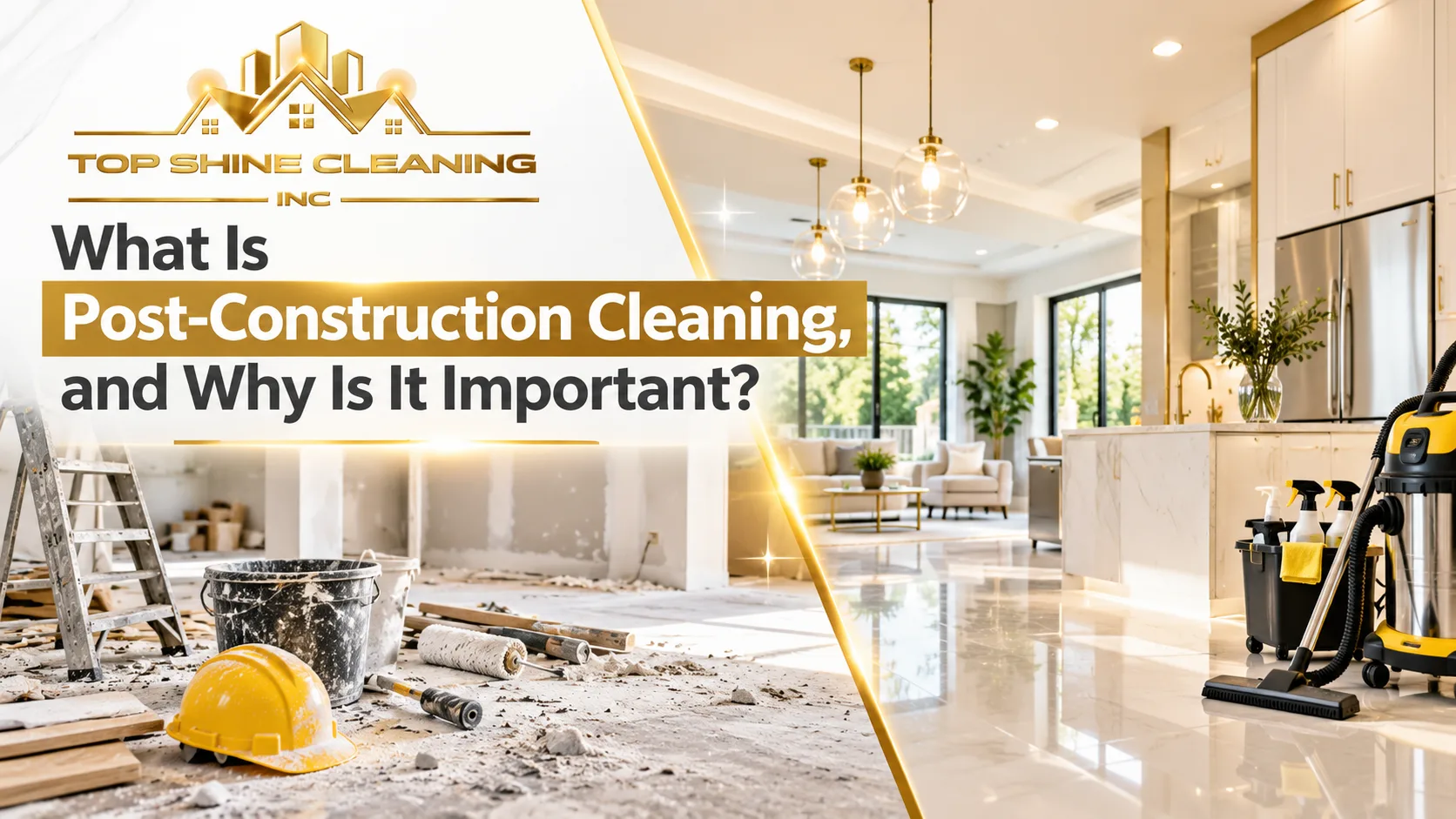
Post-construction cleaning is the process of post-construction dust cleaning, which contains various phases for dust removal and safety processes for removing fine particulates such as drywall dust and silica; most construction workers are exposed to silica dust on the job. The popular approach is just to wipe or vacuum everything once the contractor leaves. That sounds reasonable until the dust foxes inside the cabinets, around windows or light fixtures. A newly renovated house looks finished while still holding the leftovers of cutting, drilling, sanding, flooring work, drywall installation and painting.
For renters, homeowners and businesses, the practical post-construction dust-cleaning question is not just whether the space looks clean and fresh. It's about whether the remaining dust, debris and residue have been handled in such a way that supports a healthier and more comfortable indoor environment and proper handover from construction to occupancy.
Through this blog, you will get the complete post-construction dust cleaning guide in detail:
Actual Meaning Of Post-Construction Cleaning
- Post-construction cleaning is not the type of basic maintenance cleaning. Basic cleaning keeps the home occupied by addressing routine dust, bathrooms, floors, kitchens and accessible surfaces. The work of post-construction involves areas that contain drywall dust, insulation fragments, wood particles, paint splatters, packaging, residue, sharp debris and construction film.
- The difference changes the sequence, tools and amount of inspection required. A regular cleaner can dust a shelf and move on. The post-construction cleaner properly checks the shelf, its edges, cabinet hardware, the floor below it and the nearby area where particles collect. The work of post-construction cleaning is closer to a controlled reset than a standard housekeeping service.
The Link Between Construction And Occupancy
- Constructors basically focus on installing, building and finishing. Cleaning professionals can make the proper space for people to use. That link means a new office, renovated kitchen, home, or HOA is being prepared for buyers because visible completion will not prove that construction residue is removed.
- The post-construction dust cleaning guide says work areas should be cleaned properly before occupants return and all areas should be cleaned thoroughly at the end of the job. In applicable renovation situations, clearance requirements may be especially strict.
- Window sill dust can be below 40 microorganisms per square foot, and floor dust is below 5 microorganisms per square foot before occupancy. These thresholds are not applied to every remodelling project but illustrate why it looks fine is not a reliable quality standard.
A proper post-construction cleaning may include:
- Job residue removal
- Fine particle control
- Detail restoration
- Occupancy preparation
Recognizing The Hidden Risk Of Construction Dust
- Even after the room looks cleaned and finished, it still contains respiratory hazards. Construction dust is not a harmful substance; it's just a mixed particulate load. It contains wood dust, drywall compound, b and insulation fragments.
- There is no need for homeowners to diagnose hazards before changing the cleaning plan. Fine particles can remain on floors, ledges, cabinets and other surfaces even after the visible scraps are removed. Simple sweeping can put that residue back, while the household vacuum may release the particles if its seals and filtration are not designed for fine construction dust.
Why Visible Cleaning Is Not Sufficient
- Drywall sanding dust can spread easily because it's fine and light. Silica dust can present a great concern because respirable particles can go deeper into the lungs. Concrete or cutting tile during bathroom, patio, basement or flooring projects makes dust control more important than just masking the residue with a fragranced cleanser.
- Silica standards prohibit dry brushing or dry sweeping when those methods could expose individuals to respirable crystalline silica. It favors wet methods like HEPA-filtered vacuuming or any other method that reduces exposure. It also limits the use of compressed air for surface cleaning when it creates a dust cloud. The silica standard provides the specific requirements.
Navigating The Phases Of Professional Cleanup
A post-construction dust cleaning in Vancouver works best as a sequence, not a single rushed visit. Each phase removes a different layer of mess and skips the early work that can make the final detail pass less effective.
Phase 1: Removes Job Site Burden
A rough cleaning can handle the large material or debris that does not belong to a finished space. Depending on the agreed scope and project, this includes loose construction waste, packaging, scraps, stickers, protective film and accessible debris left after finishing the trade. That stage exposes the surface that needs detailed cleaning and creates safe working paths.
Phase 2: Address Settled Residue
This is the detailed removal stage. Crews work through trim, walls, baseboards, cabinets, floors, fixtures, window tracks, glass and other accessible surfaces. The sequence moves from top to bottom, with wiping and vacuuming chosen according to the type and materials of residue. At this stage, the construction zone begins to look like a workplace or home.
Phase 3: Catches What First Passes Reveal
The fine cleaning happens when heavier work is completed, and remaining work gets the opportunity to settle. It focuses on fine residue, smudges, floor finish, glass streaks, and other small details that matter during move-in, walkthrough, opening or listing presentation. The final inspection covers more than the centre of the room.
Final Thoughts!
For renters, landlords, property managers and realtors, the final cleanup can be tied to the move-in or move-out date. A dedicated cleaning service can address the empty space in detail that becomes difficult when the belongings arrive. Businesses may need the deep cleaning after renovation, and HOA boards may need community amenity cleaning before residents return.
The goal is not to make the construction site smell like a cleaning product; it is just about removing the fine residue, protecting new finishes and making the space comfortable. You can request a free estimate from Top Shine Cleaning for post-construction cleaning with natural and low-odor products and also get personalized services for homes and offices.
Frequently Asked Questions
What is the importance of post-construction cleaning?
Post-construction cleaning is important because of better air quality, safety, surface protection and a healthier indoor environment.
What is involved in the cleaning process?
The cleaning process involves rough cleaning, deep cleaning and then final touch-up.
Can post-construction cleaning be done without professionals?
DIY cleaning methods are suitable for rooms, but for the entire property, post-construction cleaning is only done by professionals.
When to schedule the post-construction cleaning?
You can schedule the post-construction cleaning once all the construction work is completed.
On which factors does the cost of post-construction cleaning depend?
The factors on which the cost of post-construction cleaning depends include the square footage of the entire property, accumulated dust, the amount of glass surface area and special material requirements.